



4
12 月
2023
Copy Link


Sweeping into the boardroom with his usual high energy and offering a firm handshake, S P Setia Bhd president and CEO Datuk Choong Kai Wai is a man with a mission. Clearly focused on taking the company to greater heights, he speaks candidly about how the company is growing in Malaysia and abroad.
Key initiatives under his watch include a push to reduce the company’s gearing by disposing of non-core land, which gives S P Setia additional cash to acquire land that can be turned around quickly and provide the necessary revenue to bolster the company’s growth.

Choong (centre) with (from left) The Edge Malaysia editor-in-chief Kathy Fong, editor emeritus Au Foong Yee, The Edge Media Group publisher and group CEO Ho Kay Tat and City & Country editor E Jacqui Chan (Picture by Mohd Izwan Mohd Nazam/The Edge)
The group is also diversifying its product line by going into the development of industrial parks in a big way. Three sites on several hundred acres have been set aside for this task. Choong sees great potential in this sector, as the demand for industrial properties has been high.
Meanwhile, the company’s financial performance in terms of revenue earned has improved in FY2022 compared to FY2021, achieving RM4.452 billion compared to RM3.762 billion.
Choong says being on The Edge Malaysia’s Top Property Developers Awards list once again reminds him and his team that they must always push the envelope while negotiating headwinds and challenges faced by everyone in the industry.
The following are excerpts from City & Country’s interview with Choong.
City & Country: What have been some company highlights?
Datuk Choong Kai Wai: We continue to do well in our township developments. We now want to go for regional growth, for example, in Vietnam. We finished two projects in Melbourne, Australia, which are UNO Melbourne, and Sapphire by the Gardens and Shangri-La hotel. They gave us good returns and it will be natural for us to continue to put capital allocation in the right place with good capital returns.
Recently, you heard that we bought a piece of Sydney land on Atchison Street, St Leonards. It is only 0.34 acres, will have an estimated GDV (gross development value) of RM708 million and should commence next year, in the third quarter. There should be 126 units in a 30-storey tower. It is our first time to Sydney after eight years of trying. It’s a good piece of land and will give us a good return and a quick turnaround. It is in the suburbs, where the demographic is good.
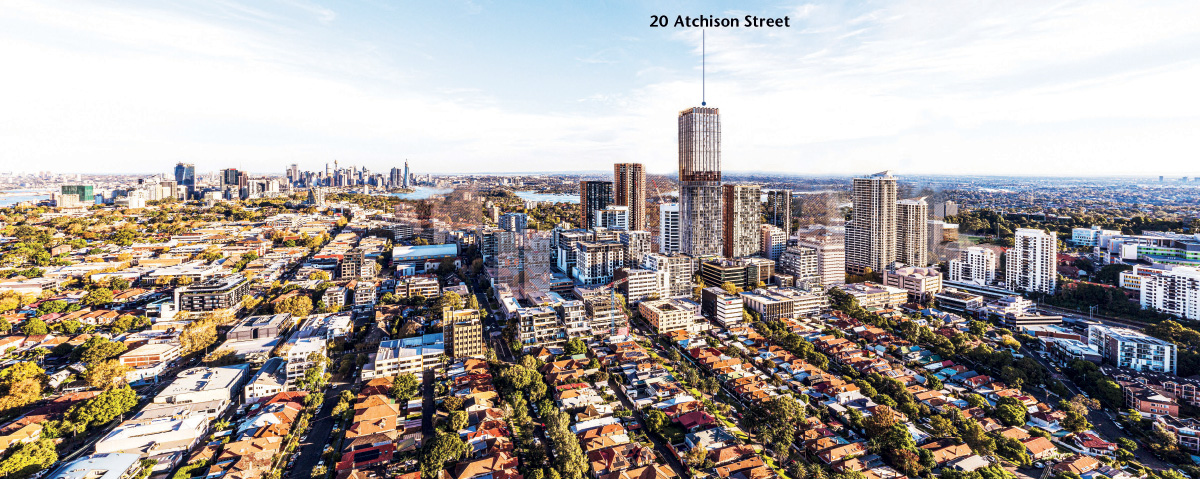
S P Setia acquired the prime site of 20 Atchison Street in Sydney, New South Wales, for its first Sydney project after eight years of trying to enter the market there – Photo by S P Setia
What are your regional growth plans?
Right now is the right time to go to Vietnam. Australia is still very good and resilient because, owing to Covid-19, in the last two years, there have been no migrants coming in. Now, they’re coming back. So, it’s a good time to be in Australia. As I say, go for places with population growth, that is very important. In a city that grows, you can’t go too wrong.
Where else are you looking regionally?
Of course, Singapore. We just finished one project called Daintree Residence in 2022, in Bukit Timah. We’re exploring Singapore in a very careful manner. Indonesia, not yet, but, of course, we welcome any opportunities.
Anything that comes to our desk, we go through it … We don’t want to rule out any country. We look at the risk and returns.
What has S P Setia been busy with lately?
We are looking into three sites for industrial parks that we’re going into in a very big way next year. Very, very big way. They are Setia Alaman in Shah Alam, with 399 acres and an estimated GDV of RM3.09 billion; Tanjung Kupang in Johor, near Tanjung Pelepas, with 307 acres and an estimated GDV of RM1.87 billion; and Setia Fontaines in Penang, where we are planning to zone 323 acres of the 1,700 acres for industrial use. The estimated GDV is RM1.68 billion. [The industrial parks] will give us very consistent revenue for the next five to eight years.
Also, we have different models in our industrial parks. We can sell the land, sell-to-build, build-to-sell and build-to-lease.
We also have plans to have a REIT (real estate investment trust). So, that will also bring in good cash flow. At the same time, we can become REIT managers, which is another stream of income.
We are also going into collaboration. We have almost 80 acres of commercial land. We cannot be building all the office towers, so we will probably do a joint venture with someone who can build them, and we will do the management for them.

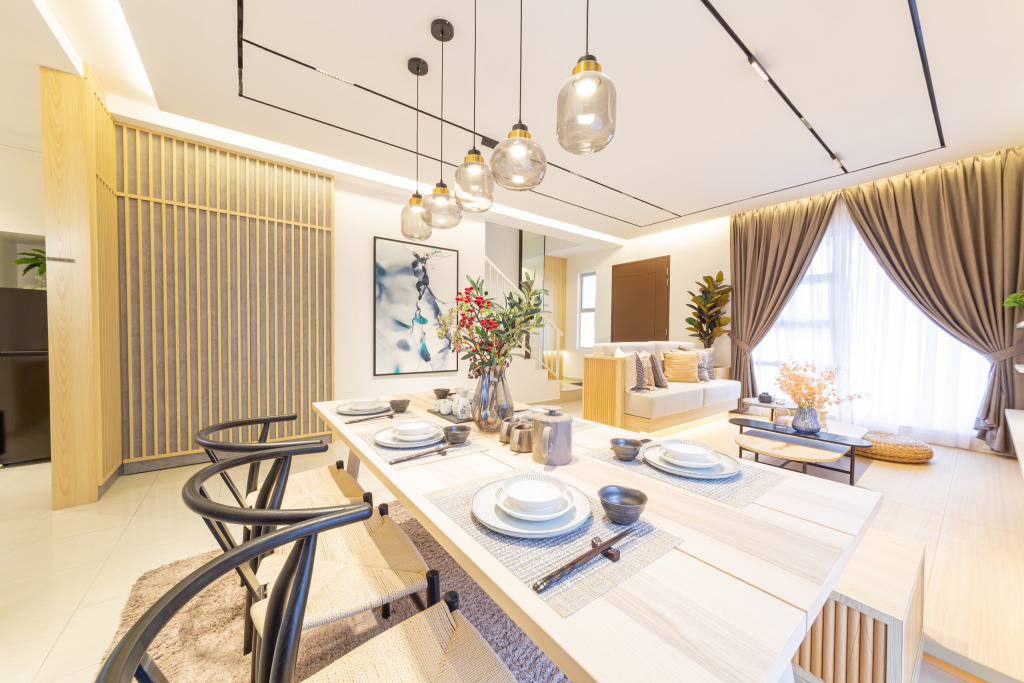
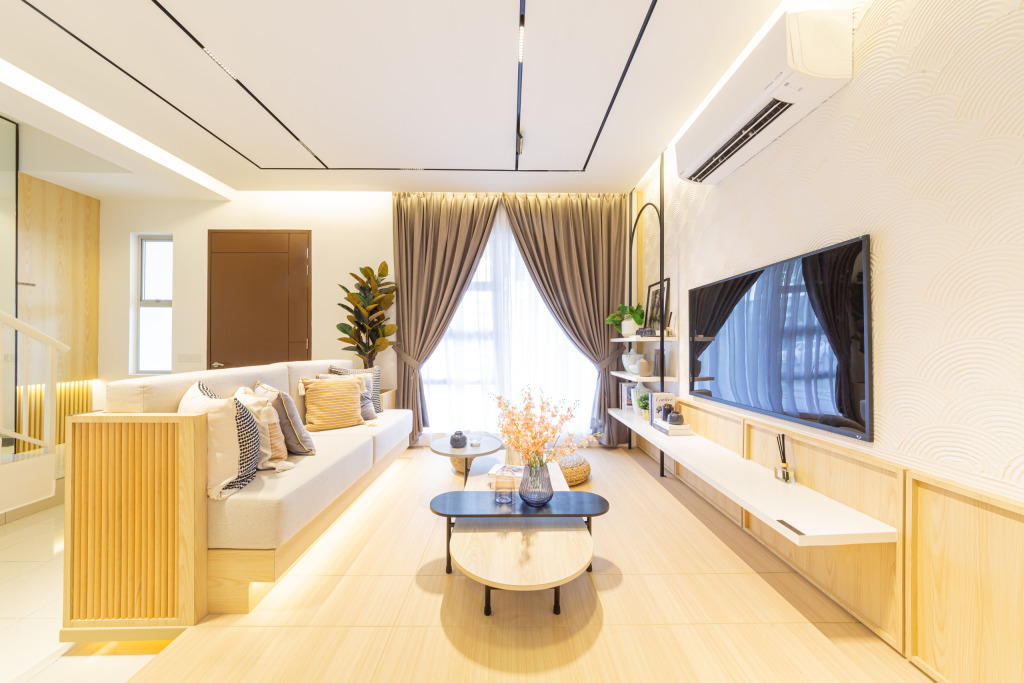
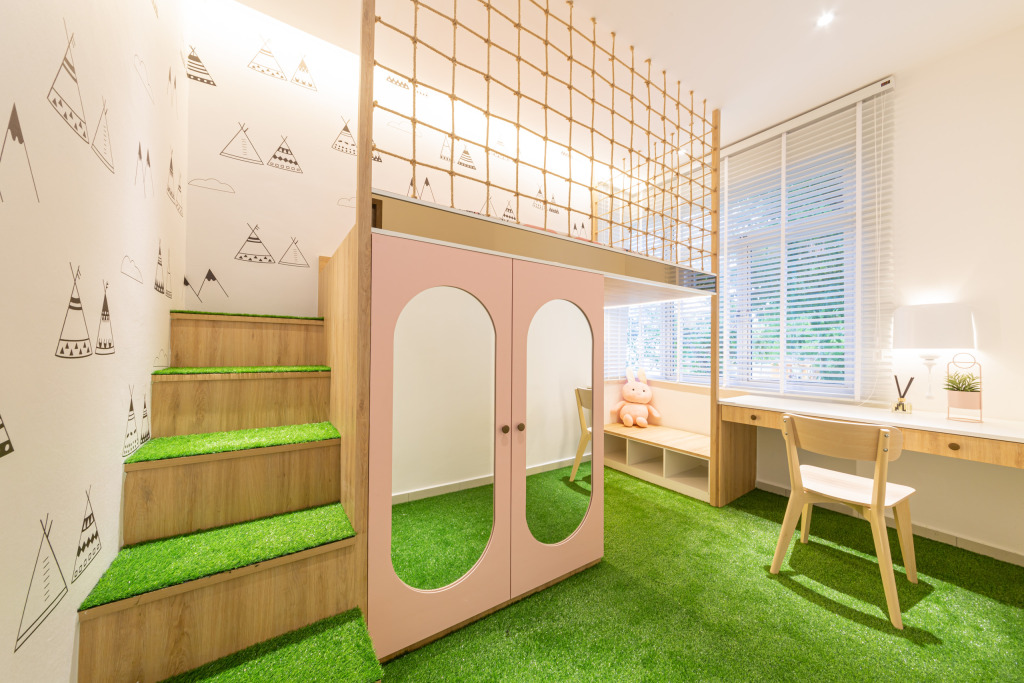
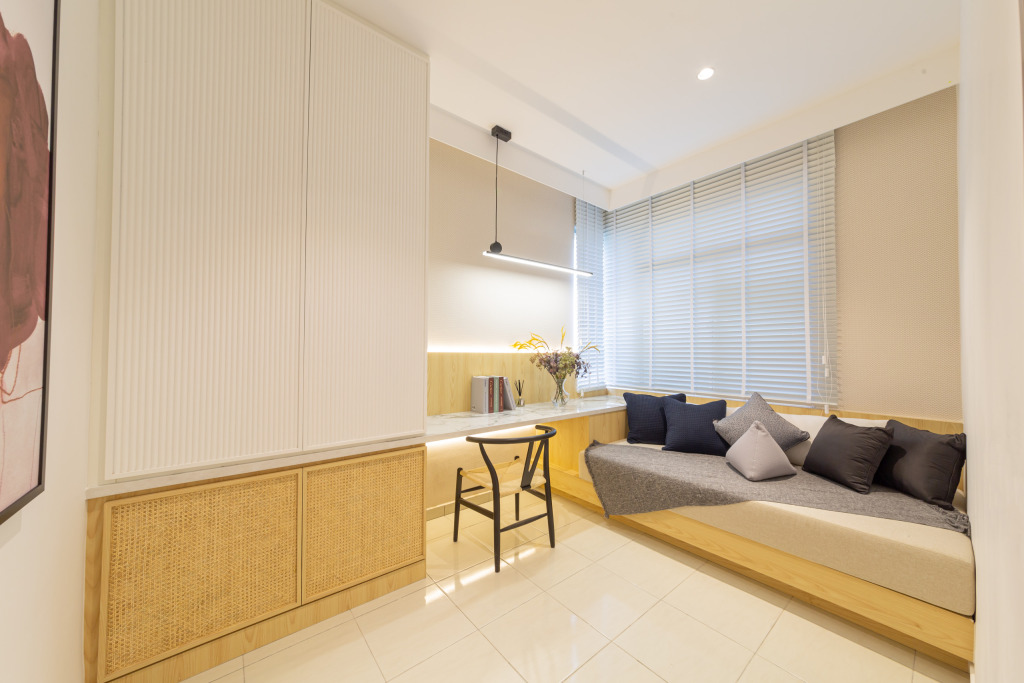
Homes in Laelia II in Setia Bayuemas in Klang, Selangor, offer a loft-style design – Photo by S P Setia

The commerical offering in Pelangi Avenue in Taman Pelangi, Johor – Photo by S P Setia
Then, there is the 52 acres Setia Federal Hill on Jalan Bangsar. We will kick off that mixed-use project with our first product, a residential tower, with units of 480 to 1,329 sq ft at between RM650,000 and RM1.6 million. It will probably be launched in the third quarter of next year.
Of course, Battersea Power Station is a long-term investment; it is good for another 10 to 15 years. We asset-manage the power station. Then, we get returns. Some of the retail components still belong to the consortium. So it will be a long-term thing.
Last year, I said we were unlocking the land value. It is happening because we have land worth RM150 billion in GDV. If every year, we do RM4 billion, it will take 35 years to complete. There’s no point in holding it, especially when there are huge borrowings. You need to balance it. Therefore, we sold 500 acres in Semenyih to Mah Sing Group Bhd and we sold 960 acres in Tebrau, Johor, to Scientex Bhd.

An artist’s impression of the view from atop KL Eco City – Photo by S P Setia
At the same time, we are going to buy a piece of land that we are eyeing in Setia Alam Impian; we are going to acquire it from another developer. So, we continue to be very efficient in our land development.
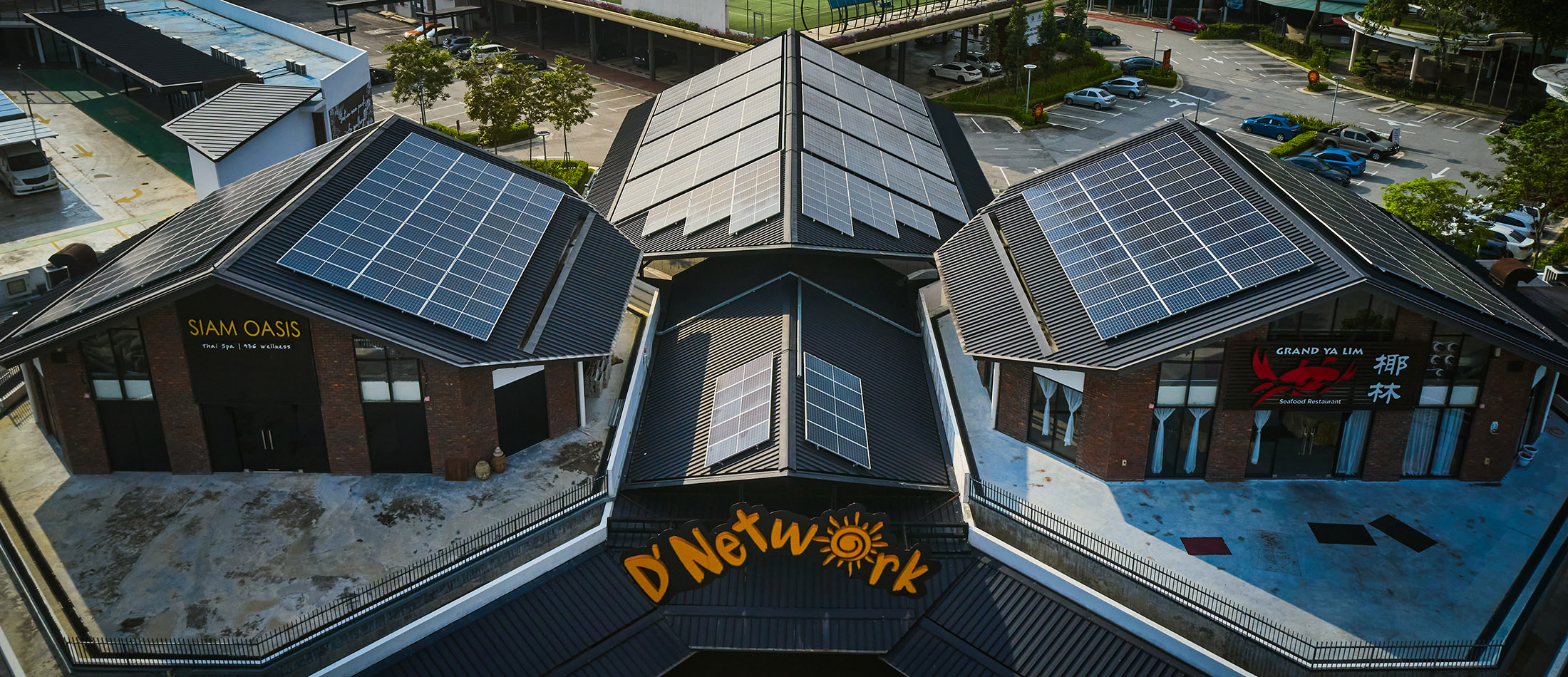
We are also championing our green agenda. In fact, we have already started with the installation of roof solar panels and all houses will be EV (electric vehicle)-ready. Rainwater harvesting is standard.
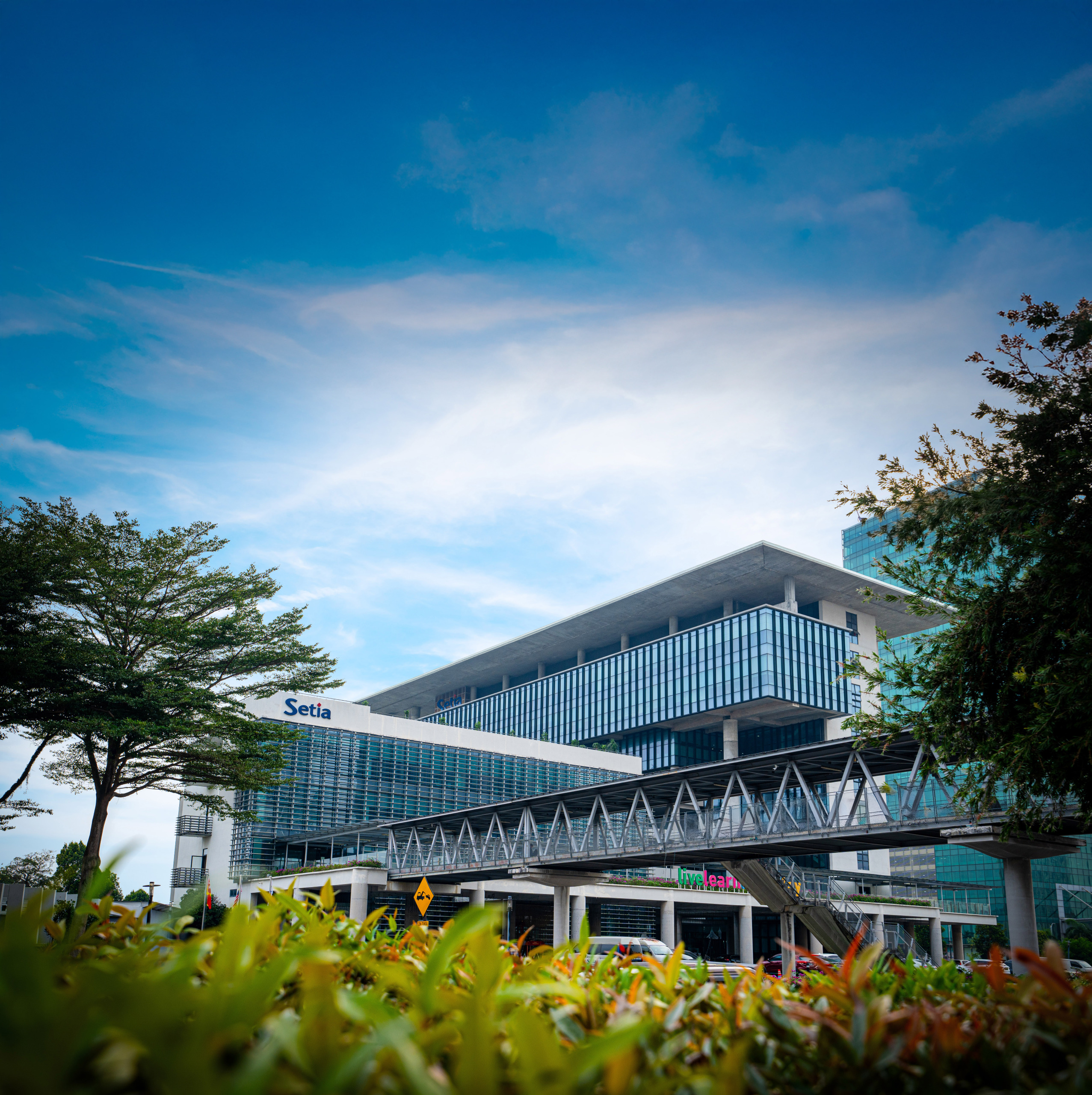
Our head office already has solar panels and all our commercial properties will have solar panels installed. By the end of this year, most of our commercial properties will already have solar panels. It is in progress.

What significant milestones have been achieved in the last financial year?
Our borrowings came down drastically over the last two years — by almost RM2.9 billion. We have identified a new growth area, which is industrial development, which will bring in constant income.
We have identified properties that can be REIT-able
when the time comes. We have identified and will continue to be in places where we are strong, such as Vietnam and Australia.
At the same time, we are digitalising what we can.
What challenges will the property market experience in the coming years?
The challenges, of course, are rising costs, high interest costs and construction costs. Everybody is facing the same thing. No doubt about that. For you to maintain a margin, you have to be more efficient.
We monitor every small thing. Every time we have anybody log in to our site, we know how quickly we respond to them. For customer service, you have to be really ahead of everybody else. You cannot take your own sweet time to respond to people. Now, we are going to digitalise the system. The minute somebody replies, at least you have a chat box, an AI chat box, that says, ‘Hi, how are you?’ — anything. At least answer them first. A survey done shows that most the developers, including S P Setia, on average, take 2.7 days to reply to a customer. We wanted to make it within five minutes, not even half an hour.
Are there any updates on significant on-going projects?

The most significant is the Setia Alaman industrial park. We are getting the rezoning done and already have ready buyers. That will not only bring employment but also profit to S P Setia, as well as foreign direct investment income. We build factories and provide employment. This is a very good thing. Apart from making a profit, of course, we’ll be a very well-managed, world-class industrial park.
How will S P Setia’s green agenda translate into its products?

The easiest way to go green is to try to save energy first. Saving energy means using the green switch, which turns off all the non-essential lights and products in the house; use LED lights.
Next, try to use green energy such as that from solar farms, not from burning coal.
So, we educate our buyers to, first of all, save energy. Use all the green products. Try not to use plastic. The second thing is that if you do have
bioenergy, make sure it’s from solar. Or from solar farming energy, clean energy.
We also have Box 366, which are pillars at S P Setia homes that have two sections, one for food and the other for parcels sent by delivery services. So, it’s secure.
And then the material we use will be eco-friendly. But our houses will teach you how to save energy. The minute you step into it, you know that there’s a green agenda in this house. Basically, it will be an energy-efficient and multi-generational house.
What are the plans for the company?
The big future for S P Setia will be to organically grow our sales. Malaysia will be at the forefront, our mainstay. We will have regional sales from Vietnam and Australia. We are still studying Indonesia. Again, London will be another 10 to 15 years through the Battersea Power Station.
We will have a very efficient workforce. We will go into digitalisation and innovation. We will create a new revenue stream from industrial parks. We are planning to go into REITs. We are going into an asset-based structure, which means we manage as well as have joint ventures. Nowadays, it’s more about collaboration than just you doing it on your own.